4-Star vs. 5-Star Eidos: How Big Is the Power Gap?
Some 4-star Eidos outclass 5-stars in Honkai: Nexus Anima. Here is what actually drives power, plus how to build real teams around it.
Rarity is not the whole story in Honkai: Nexus Anima. A 5-star Eidos costs more to pull, but its real strength depends on its bonded Anima’s signature kit and how deep its Aspect roster is, and both of those can make a 4-star outperform a 5-star in practice. This guide breaks down where the power actually comes from, why some Aspects feel weaker than others right now, and how to build a full nine-Anima team around the units that are actually strong rather than the ones with the highest rarity tag.
Key takeaways
- Rarity sets a stat floor, not a power ceiling. Two 4-star Anima, Starspine and Framamba, sit in our tier list’s top Meta Pick tier alongside several 5-stars.
- A 5-star’s signature and skill are separate trade-offs. Some 5-stars carry a strong skill on a mediocre signature, or the reverse, so “5-star” alone does not tell you what you are getting.
- Aspects without a playable Eidos feel weaker to play, because they lose the passive support layer Eidos usually provide. Love and Insatiability currently have no playable Eidos.
- Good teams are built from “cores”, two or three units of one Aspect combined with a second Aspect core, rather than one mono-Aspect formation.
- Apex Club plays like an asynchronous roguelike autobattler, closer to The Bazaar than to TFT, and its higher difficulties test resistance-splitting and crowd control rather than drafting skill.
Rarity isn’t the whole story
Pull rarity buys you a stat floor. It does not automatically buy you the strongest kit, and the current roster has clear examples in both directions.
Camcorgi (5-star, Memory) sits at the top of our tier list as, in our own words, “the most complete unit in the game right now.” Its skill freeze-frames a fan-shaped area and guarantees crits into anything caught inside, and its passive refunds energy off any teammate’s crowd control, not just its own. Memory is also the deepest Aspect on the current roster, so running Camcorgi never costs you a team slot elsewhere.
Starspine, by contrast, is only a 4-star, and it still lands in the same Meta Pick tier as Camcorgi. Its Starlight effect strips Armor and Magic Resist in a stack that never falls off, so it gets stronger the longer a fight runs, and Light’s synergy threshold only needs two units to turn on. It is also cheap to raise, which makes it one of the best early investments on the entire roster, 5-stars included.
Framamba, a second 4-star Meta Pick, earns its slot less on its own numbers and more on what it enables: its skill hits hard and buffs a whole row’s attack speed and basic-attack damage, and it happens to be Shilian’s bonded Anima. That pairing puts the cheapest real Memory core in the game at four stars, Camcorgi, Framamba, and Shilian, before you have pulled a single 5-star.
On the other end, Bai Mei (5-star, Reality) carries one of the strongest skills in the game, a full-board multi-second stun, on a signature that most testers consider one of the weaker ones among the 5-star Eidos. Blade (5-star, Strength) is closer to the opposite: a so-so skill paired with a strong, flexible signature and passive that make him a safe include even on paper-thin front lines. Neither is a bad pull. They are just strong for different reasons, which is the point: “5-star” describes a floor, not a fixed amount of power.
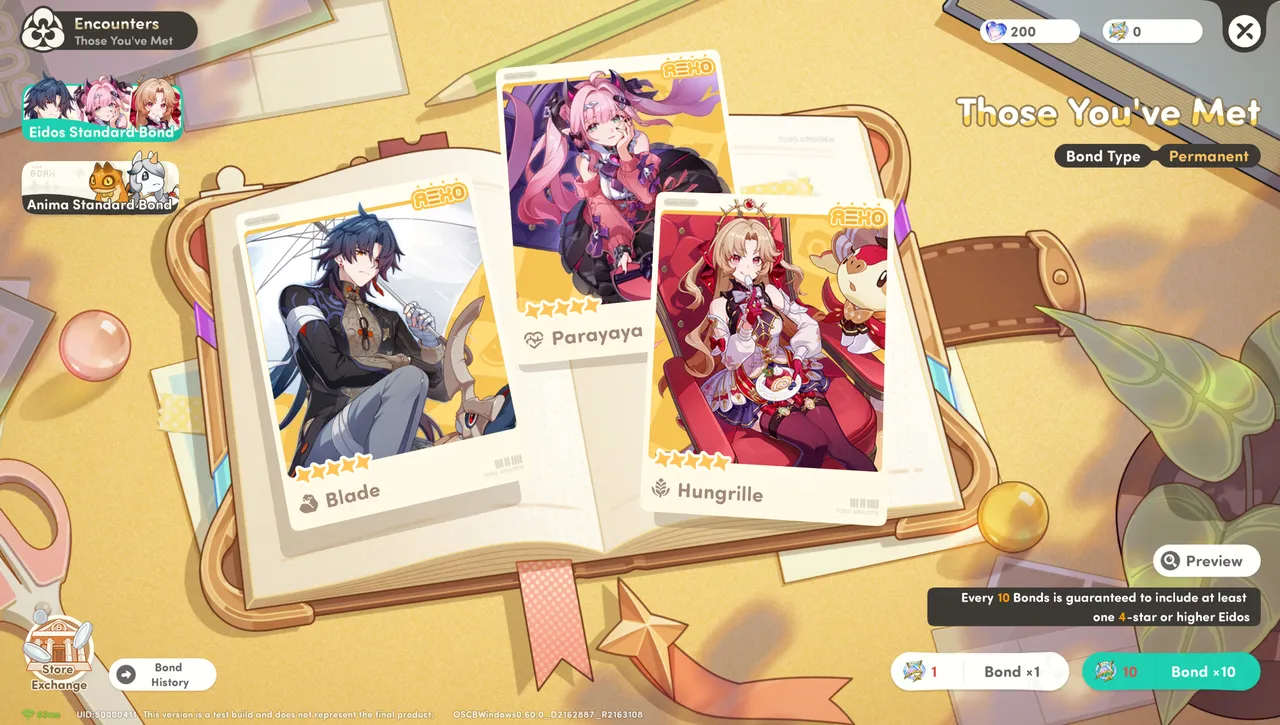 Pull rarity sets a stat floor. Signature strength and Aspect depth decide the rest.
Which 5-star Eidos to prioritize, if you are still choosing
None of the above means 5-stars are not worth pulling for. It means the reasons to want a specific one vary, so here is our current read on the safest picks and why each earns the recommendation.
Herocrates is the pick we would build a first account around. His ultimate costs 210 energy, the cheapest of any 5-star Eidos, so his cycle comes online faster than most Novarchs’. He is bonded to Camcorgi, already the strongest Anima on our tier list, and he sits in Memory, the deepest Aspect on the current roster. Cost, pairing, and Aspect depth all point the same direction.
Bai Mei is the pick to take if your team needs a flex answer to hard-CC checks. Her skill is a full-board multi-second stun, one of the strongest control tools in the game, and it slots into essentially any team regardless of Aspect. The trade-off is a comparatively weaker signature, so she is a utility pick more than a damage pick.
Hungrille is the closest thing to a default-safe pick. Her bonded Anima Hoggit and the broader Satiation Aspect give a formation real sustain with a synergy threshold that only needs 2 units to activate, and Vulberry is a strong Satiation carry with or without her on the team.
Blade rounds this list out as the pick for a front line that feels too fragile. His skill is unremarkable on its own, but his signature and passive are strong and flexible enough to anchor a Strength-based front row even in an otherwise thin formation.
If you can only build around one of these four early, Herocrates and Hungrille are the two most team-agnostic choices; Bai Mei and Blade are closer to targeted answers to a specific problem (control and front-line survivability) rather than default includes.
Why some Aspects feel weaker than others
A meaningful chunk of an Aspect’s strength currently lives in its Eidos’ passive support rather than in the base Anima kits, which means an Aspect with no playable Eidos has to do everything itself. Right now, Love and Insatiability have no revealed playable Eidos, so teams built around either one lean entirely on Anima kits with none of the passive backing that, say, Memory gets from Herocrates or Satiation gets from Hungrille.
This gap does close over time. Change is a good example: it currently has a confirmed Eidos in Amorphiron, but Amorphiron is a story-only Novarch, not a playable unit, so Change still plays out functionally the same as Love or Insatiability today, even though its Eidos slot is technically filled on the roster page. Treat “no playable Eidos” as the more useful filter than “no Eidos at all” when judging whether an Aspect is worth building around right now.
For the full list of which Aspects have real roster depth and confirmed synergy thresholds, see the Aspect synergy guide and the Aspects page. Neither problem is permanent: Change went from unsupported to partially supported as new Eidos were revealed, and the same is likely for Love and Insatiability as more of the roster gets confirmed.
How to actually build a team: the “core” strategy
The strongest approach we have found in testing is not committing to one mono-Aspect formation. It is building two or three small cores, each two to three Anima deep in a single Aspect, and combining them into a full nine-Anima lineup.
This works because most Aspect synergy thresholds unlock early. Dark’s first tier needs only 3 units to grant a stacking Attack Speed bonus through Umbral Shrouds, and Satiation’s first tier needs just 2 units to start periodic healing based on missing health. Neither threshold requires you to commit your entire team to one Aspect, which is exactly what makes mixing cores viable instead of forcing you into a single mono-Aspect formation.
A real worked example: a Dark core built around Olympia and her bonded Anima Noctumbra, filled out with Waxula or Vixemourne and Felinoxie, clears the 3-unit Dark threshold on its own and leaves room for a second core. A Satiation core built around Hungrille and her bonded Anima Hoggit, plus Vulberry, clears the 2-unit Satiation threshold with a slot to spare. Run both cores together and you have a six-Anima base with two active synergies, then fill the remaining three slots with whatever your formation is missing. A common way to close out the last three: two more Light Anima to clear that Aspect’s 2-unit shield threshold, plus a single flex pick like Camcorgi for its stun-and-crit utility, giving you three active synergies (Dark, Satiation, Light) and a control answer in one nine-Anima formation. Swap the Light pair for a third Dark or Satiation unit instead if you would rather push a core toward its next synergy tier than open a third Aspect; both are valid, and which one is better depends on whether your formation needs breadth or a deeper single payoff.
For row placement and the mechanical side of Trait roles, read the formation guide. For the full Aspect threshold table, use the Aspect synergy guide. Then draft the actual lineup in the team builder before committing Bond time to it.
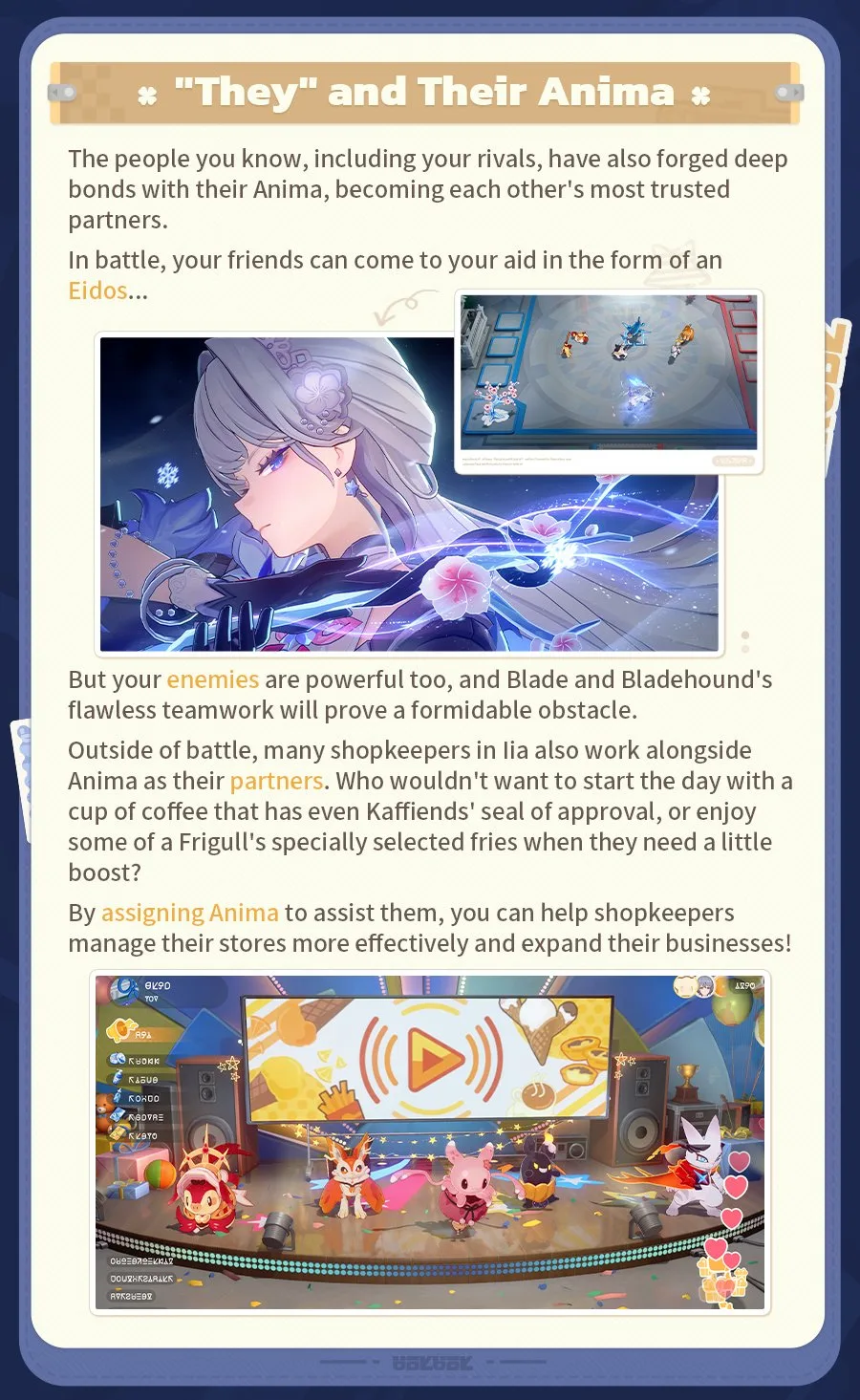 Two small Aspect cores, mixed together, beat one team stretched thin across a single Aspect.
Apex Club through an autobattler lens
Apex Club is the mode where this team-building actually gets tested at its hardest. HoYoverse’s own preview frames it simply: name a Star Anima, clear challenges to upgrade its skill, and repeat clears have a chance to bond exceptionally rare Anima. That description is accurate but undersells what it plays like once you push into the higher difficulties.
Structurally, Apex Club sits closer to an asynchronous roguelike autobattler, in the vein of The Bazaar or Super Auto Pets, than to a head-to-head PvP autochess like Teamfight Tactics. There is no shared shop that every player draws from and no item system that lets you guarantee a specific unit gets targeted or positioned a certain way. You are optimizing a single run against the mode’s own scaling, not out-drafting a human opponent.
At higher difficulties, two things matter more than raw team power. The first is resistance splitting: encounters tend to load enemies with near-total Armor or near-total Magic Resist on one side of the fight, which means a team that can only deal one damage type gets walled outright. The second is crowd control against stat-boosted enemies: some encounters field individually roided-up units that can one-shot an unprepared formation, and the reliable answer is hard CC rather than raw damage. Camcorgi, Starspine, and Faeflux are among the more consistent CC options if you do not already have a 5-star built around control.
Bottom line
Rarity is a starting point, not a verdict, in Honkai: Nexus Anima. Two 4-star Anima already sit in our tier list’s top tier, some 5-stars trade a strong skill for a weak signature or the reverse, and the Aspects that feel weak right now are missing a playable Eidos, not necessarily missing good Anima. Build around two or three-unit Aspect cores instead of one mono-Aspect team, and treat Apex Club’s higher difficulties as a resistance-and-CC check rather than a raw-power check.
Check the full tier list for our current Meta Pick and S-tier calls, browse the Eidos database and Anima dex for every confirmed kit, and draft your own cores in the team builder before you commit Bond time to a formation.
Frequently asked questions
- Are 5-star Eidos always stronger than 4-star Eidos?
- No. Rarity sets a stat floor, but a unit's real strength comes from its bonded Anima's signature and how deep its Aspect is. Several 4-star Anima, including Starspine and Framamba, sit in our tier list's top Meta Pick tier alongside 5-stars, because their kits punch above their rarity.
- What is the strongest 5-star Eidos right now?
- Herocrates is our current top recommendation. His ultimate costs only 210 energy, the cheapest of any 5-star Eidos, and he is bonded to Camcorgi, the single most complete Anima on our tier list. Bai Mei, Blade, and Hungrille are also strong, safe picks with slightly different trade-offs.
- Why do some Aspects feel weak to play?
- An Aspect without a playable Eidos loses access to the passive support that Eidos typically provide, so it has to stand entirely on its Anima kits. Love and Insatiability currently have no playable Eidos, which is why teams built around them tend to underperform teams with full Eidos backing.
- What is a team "core" in Honkai: Nexus Anima?
- A core is two or three Anima of the same Aspect that you build a formation around, then combine with a second core of a different Aspect to fill out a full nine-Anima team. It is a more flexible approach than committing to one mono-Aspect formation.
- Is Apex Club similar to Teamfight Tactics?
- Not directly. Apex Club plays closer to an asynchronous roguelike autobattler, in the vein of The Bazaar or Super Auto Pets, than to a head-to-head PvP autochess like TFT. There is no shared shop and no item system to guarantee positioning, so you are optimizing your own run rather than out-drafting an opponent.
- What should I look out for at Apex Club's higher difficulties?
- Two things: near-total resistance walls that split enemies into physical- or magic-resistant camps, and occasional stat-boosted enemies that can one-shot an unprepared team. Crowd control from Anima like Camcorgi, Starspine, or Faeflux is one of the more reliable answers to the second problem.