Path of Legends Guide for Honkai: Nexus Anima
Path of Legends is the roguelike auto-battler mode in Honkai: Nexus Anima. How runs, Star Anima, Plot Twists, Performance Coins and Actor Rating work.
Path of Legends is the roguelike auto-battler mode in Honkai: Nexus Anima: a run of consecutive battle rounds, framed as a film shoot, where you pick a Star Anima, add Plot Twists and buy Relics with Performance Coins. Every run resets, and Actor Rating tracks your progress.
If you have played Teamfight Tactics or Honkai: Star Rail’s Simulated Universe, the shape will feel familiar. Your permanent roster is the starting pool, but the power curve inside a run comes from choices you make between rounds. This guide explains each of those choices using the game’s own rules text.
Closed-beta caveat. Everything here comes from the closed-beta client, including its in-game help article. HoYoverse has already renamed and reworked parts of this mode between builds, and many numbers are placeholders in the text. Treat names and rules as subject to change before launch.
Key takeaways
- It is a run mode, not a permanent upgrade. Relics, Crew Meals, coins and Plot Twists all disappear when the run ends.
- Your Star Anima is the centrepiece. It gets an exclusive enhancement that scales with its level, and you can reroll the candidates with coins.
- Plot Twists are 1-of-3 picks that add a rule to the current run. Each can be refreshed once per phase.
- Losing costs Health, not the run, until Health hits zero. Audition shoots use Film Rolls instead.
- Normal Mode climbs Actor Rating; Casual Mode farms safely. Both pay weekly Box Office Points.
- Weekly rewards reset Monday 04:00 server time and include Aspect Gems and Bonds That Tie.
How to unlock Path of Legends
Path of Legends is tied to a location in the open world, Path of Legends Pictures, and to a short quest chain. A “mysterious director” asks you to audition, and quest steps such as “Complete the first audition” and “Complete the final audition to be a future star at Path of Legends Pictures” walk you through it.
The help article is direct about the gate: “Complete the audition stages and related tutorial quests to unlock the official challenge.” Once you clear them, the game shows “Path of Legends is now unlocked.”
Actor Rating comes later
Actor Rating, the mode’s ranked ladder, unlocks separately at a set Nexus Level. The client warns about this with “Actor Rating unlocks at Nexus Level 0, but for now you won’t lose any points if you fail a challenge!” The exact level is a placeholder in the text, so we are not quoting one.
That grace period is useful. Early runs before Actor Rating unlocks are free practice, so use them to learn how Star Anima and Plot Twists interact before your results start counting.
How a Path of Legends run works
A run is a sequence of Phases. Some are battle rounds, some are Plot Twist selections, and between them you shop. The help text describes it as “consecutive rounds of battle. Choose a Star Anima, pair it with Eidoses, and select Plot Twists to strengthen your team for the challenges ahead.”
The loop for each round looks like this:
- Preparation phase. Swap Eidos and Anima in and out, move them on the board, and apply Relics and Crew Meals.
- Shop. Spend Performance Coins at Wardrobe & Props, or bank them.
- Battle. The fight plays out automatically. You can open your inventory, but “cannot use Relics or consumables” mid-fight.
- Rewards. Coins and sometimes Inspiration drop, and the next phase begins.
Inside the mode, “all Anima are temporarily raised to a set level,” so a freshly bonded Anima is not useless here. That makes Path of Legends one of the better places to test a unit before you spend Ascension materials on it.
Board size grows over the run
An earlier version of the rules text gives two more specifics: a full challenge was 12 battle rounds, and “the number of Anima you can deploy will gradually increase from 6 to 8.” The current help article no longer states a round count, so treat 12 as the earlier build’s number.
The 6 to 8 ramp matches the main game’s team size cap, covered in the formation guide. Plan your opening six around a core Aspect Synergy and leave room for two late additions.
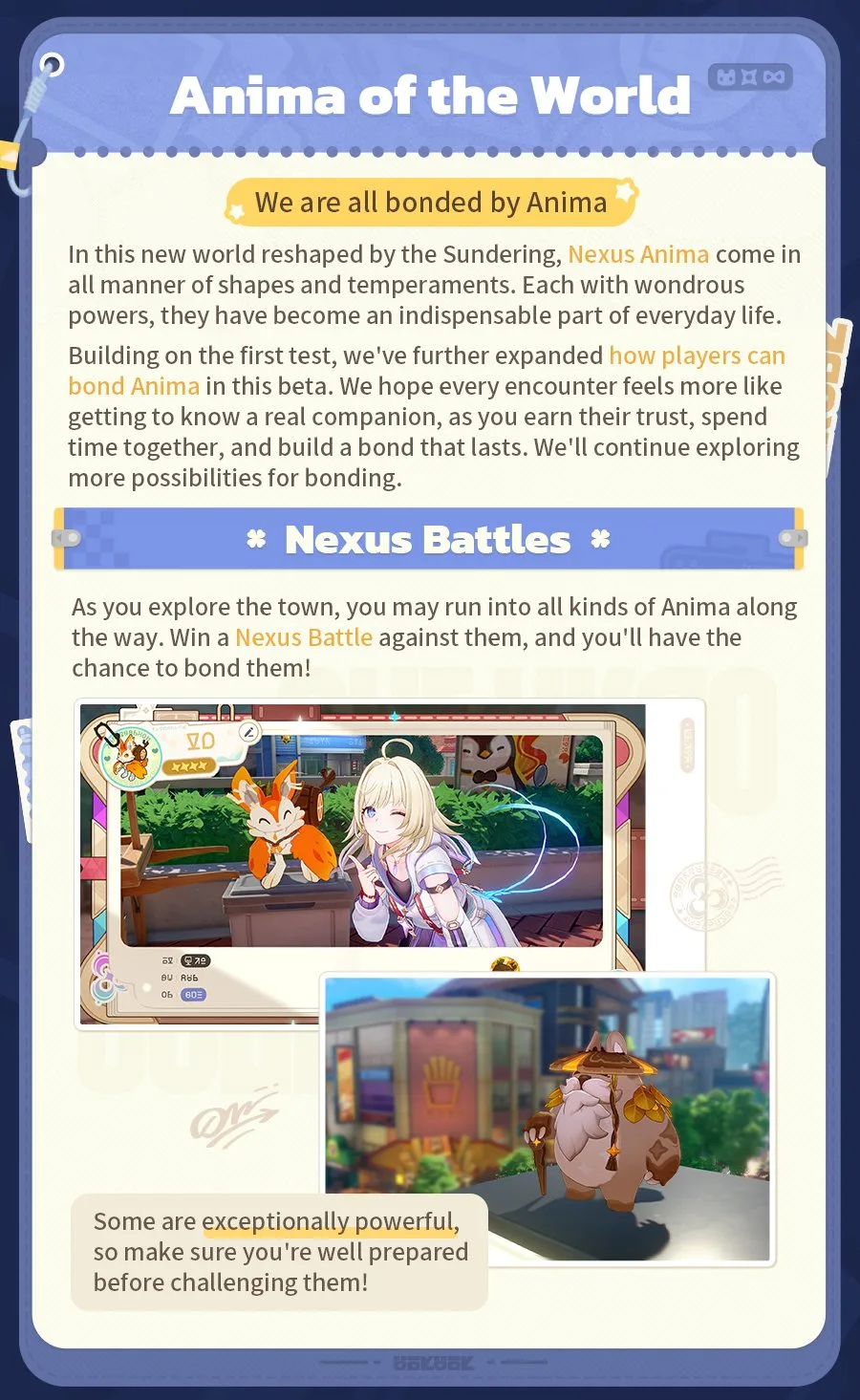 Path of Legends uses the same auto combat as Nexus Battles, with run-only items layered on top.
Choosing your Star Anima
The Star Anima is the most important pick in a run. You choose one candidate, and it receives “an exclusive enhancement that grows stronger as the Star Anima’s level increases.”
Who can be a Star Anima:
- Owned Anima that meet that Anima’s unlock requirements, at their current level.
- One weekly trial Anima from Special Appearance, at a preset trial level. This rotates every week.
If you do not like the candidates, you can “spend Performance Coins to refresh the Star Anima selection.” That is a real cost, because the same coins buy Relics. Reroll early if the offered Star Anima does not fit your Aspect core at all, and live with a merely good one otherwise.
Star Anima enhancements in the client
The enhancement text in the client shows how big these effects get. Several scale at Lv. 100 and Lv. 200 milestones, for example one that turns defeated opponents into random Inspiration (Performance Coins or Relics), with better odds of rare Inspiration at each milestone. Others reward hitting stat thresholds: one pays coins, Power Pills and a Relic as the Star Anima’s ATK passes four checkpoints during preparation.
The takeaway is to feed your Star Anima first. Level-up consumables and stat Crew Meals give the most value on the unit whose enhancement scales with them.
Star Aid quests and Star Anima achievements
Each Star Anima has two tiers of achievement goals, and separate Star Aid quests ask you to “Clear Path of Legends with specific Star Anima.” A mark on a Star Anima’s portrait shows you have not done its Star Aid quest yet.
Some Performance Skills also require clears with “a certain number of different Star Anima.” Rotating your Star Anima across runs is how the mode wants you to progress, so do not run the same favourite every time.
Plot Twists: the run modifiers
A Plot Twist is a 1-of-3 pick that adds “a special effect to the current challenge.” During a Plot Twist phase, each Plot Twist can be refreshed once, and upgrading your Performance Skills adds more refreshes.
Earlier builds called these Principles, and the client still carries dozens of them. The names give a sense of how far they bend a run:
| Plot Twist (client name) | What the text says it does |
|---|---|
| Petrilog Miner effects | A Petrilog Miner digs up a Performance Coin at intervals during battle, and a second one arrives after the first payout |
| Coin-banking effects | If you spent no coins during a round’s preparation, gain extra coins next round |
| Spend-to-scale effects | Allied units gain ATK and MP, Max Health or Attack SPD for every set number of coins spent |
| Aspect Sigil effects | Defeats by Dark or Satiation units pay coins, and enough of them grant a Sigil of that Aspect |
| Relic bundles | Obtain 2 random Relics of one role (Defensive, Hybrid, Physical Carry, Magic Carry, Energy regen) plus coins |
| Lit Hexes | Three board hexes grant Attack SPD and a Shield, scaling with coins consumed |
The pattern is clear: most Plot Twists are about coin economy or Aspect focus. Pick ones that match the Aspect your board is already built around, and be wary of a spend-to-scale twist if you also took a banking one, since they pull in opposite directions.
Performance Coins and the Wardrobe & Props shop
Performance Coins are the run’s currency. You earn them after each round, from Plot Twists and from some Relics, and the help text confirms that “unspent coins carry over to later rounds in the same challenge.”
They have three uses:
- Buy items at Wardrobe & Props, which “sells Relics, Crew Meals, and other items.”
- Refresh the shop. Locked items stay put when you refresh.
- Refresh the Star Anima selection.
During some phases a second shop, Exclusive Haute Couture!, appears. Its stock “cannot be refreshed or locked,” and once you leave it you move on to the normal Wardrobe & Props for that round. Treat it as a one-look offer: buy what you need or walk away.
One small rule trips people up: “Performance Coins cannot be collected during battle.” Coins that drop mid-fight wait until the round ends.
Relics and Crew Meals
Relics are equipment for the run only, sorted by role tags such as Physical Carry, Magic Carry, Defensive, Hybrid and Energy regen. Named examples include the Lapis Orb (freezes opponents when Active Skills are used), Fleming’s Wallet (finishes off low-Health opponents and can drop coins) and the Festering Heart (an expanding Magic DMG aura). Our artifact and Relic guide explains why none of this counts as permanent gear.
Crew Meals are the consumables. You “drag a consumable onto an Anima to apply its effect,” and it is used up. The client names them as snacks and drinks: Truant’s Elixir, Power Pill, Hellhound Cookie, Mimoo Energy Drink, Bang-Bang Pineapple Bun, Energy Gummy, Gold Macarons, Earl Grey Tea, Champion’s Crucible and more. The text map does not reliably pair each name with its effect, so we list the effects by type instead.
| Effect type | Examples from the client text |
|---|---|
| Level-ups | Raise one allied Anima’s level by a set amount, in several sizes |
| Flat stats | ATK, MP, Max Health (the Anima also grows in size), Armor and MR, Omnileech |
| Speed and Energy | Attack SPD, Max Attack SPD, Energy regen per second, a stacking 10% Energy Cost cut |
| Team Shields | One Anima retreats at battle start, or spends Max Health, to Shield the rest of the team |
| Risky trades | Skip Active Skill Energy Costs at the price of Health on each cast |
| Economy | An Anima that provides Performance Coins every round |
| One per Anima | Large ATK and Attack SPD boosts with Physical Leech and stat gains from takedowns |
A few Crew Meals are unusual enough to plan around. One sets an Anima’s level to your Star Anima’s current level, which is a strong catch-up tool for a late addition. Another summons a Puddliking of the same level after an allied Anima is defeated.
 Relics and Crew Meals can only be applied during preparation, so the fight itself is all about the board you set up.
Winning, losing and taking a break
In regular rounds, “losing a battle reduces your Health for the current challenge,” and the run “ends in defeat if you run out of Health before completing it.” One loss is rarely fatal; a streak is.
The audition shoots that teach the mode use a different counter. There, “Failing a round of battle costs 1 Film Roll,” and you need a target number of filmed scenes to wrap. Later auditions add more Star Anima, more Styling Items and more scenes per shoot.
Extra Challenges
After you clear the regular rounds, Extra Challenges can put you against stronger enemies. In Normal Mode, the Extra Challenge result “also affect[s] the Rating Points you earn,” so pushing them is how you climb faster.
Taking a break saves the whole run
You can leave mid-run without losing anything. A break saves “your current team, Relics, Plot Twists, Performance Coins, shops, uncollected Inspiration, and other challenge progress.” If you quit during combat, resuming puts you back just before that round’s battle. Note that the client also has prompts warning that leaving the challenge itself adds or deducts Film History Points, so use the break option rather than abandoning.
Actor Rating: Normal Mode vs Casual Mode
Path of Legends has two ways to play, and they reward different things.
| Normal Mode | Casual Mode | |
|---|---|---|
| Difficulty | Set by your Actor Rating | Any unlocked difficulty below your best rating |
| Rating Points | Gained or lost on results | Unchanged |
| Performance Points | Earned | Not earned |
| Box Office Points | Earned | Earned |
| Clear rewards and Star Anima achievements | Yes | Yes |
Normal Mode is the ladder. Results move your Rating Points, which set your Actor Rating, and “each rating has a corresponding difficulty, and some require a specific World Level to unlock.” Once you hit the Rating Points cap for your World Level, wins and losses stop moving you until your World Level rises.
Casual Mode is for farming and experimenting. It is the right place to clear Star Anima achievements with an Anima you have not mastered, since a loss costs you nothing on the ladder.
The Actor Rating ladder
The client names the ranks through its “Promoted to” achievement lines: Extra, Bit Player, Featured Player, Familiar Face, Supporting Star, Leading Star and Lifetime Achievement Award, with Extra and Bit Player split into numbered sub-tiers. The order above is our reading of the names, not a list the game prints.
Lifetime Achievement Award appears to be the top. Past it, the text describes enemy level and damage rising further for every additional block of points, which reads as an endless scaling tier for the most invested players.
Path of Legends rewards and weekly reset
Rewards come from four separate places, and it helps to know which is which.
- Performance Points and Performance Skills. Skills unlock after your first official challenge. Normal Mode clears pay Performance Points, which you spend on Performance Skills that strengthen future runs, including extra Plot Twist refreshes.
- Box Office Dividends. Both modes pay Box Office Points for every regular battle finished, plus a clear bonus. Your weekly total unlocks dividend tiers, which reset every Monday at 04:00 server time. The game lists Aspect Gems and Bonds That Tie among the point rewards; see the gacha guide for what Bonds That Tie are worth.
- Completion rewards for clearing a run, counted separately from Box Office.
- Commemorative Film from dividends and rating achievements, exchanged at the Concession Stand. A tutorial line says Commemorative Films “can also be exchanged for a 5-star Anima,” which makes this the mode’s long-term reason to show up every week.
The Bond guide already lists Path of Legends as a source of Bonds. If you are free-to-play, the Monday reset is the one to plan around: clear enough Box Office Points each week before it rolls over.
A simple plan for your first runs
Until the mode is live and the community has real numbers, this is a sensible default:
- Clear the auditions early. They are short and they unlock the weekly rewards.
- Pick a Star Anima from an Aspect you already field. Check your core in the team builder and the tier list.
- Take Plot Twists that match that Aspect, or ones that build coin income in the opening rounds.
- Put level and stat Crew Meals on the Star Anima first. Its enhancement scales with level.
- Bank coins when the shop is weak. They carry over, and several twists reward unspent coins.
- Use Casual Mode for Star Anima achievements, and Normal Mode when you want to climb.
Bottom line
Path of Legends is Honkai: Nexus Anima’s roguelike auto-battler mode: build around one Star Anima, steer the run with Plot Twists, and spend Performance Coins on Relics and Crew Meals. Normal Mode climbs Actor Rating, Casual Mode farms, and both feed a weekly Box Office reset with Aspect Gems, Bonds That Tie and Commemorative Film.
Next, settle the core your Star Anima will lead with the formation guide and Aspect Synergy guide, then browse the Anima dex and Eidos database for candidates. We will update this page with real numbers once the mode is playable outside the closed beta.
Frequently asked questions
- What is Path of Legends in Honkai: Nexus Anima?
- Path of Legends is a run-based challenge mode framed as a film shoot. You pick a Star Anima, pair it with Eidos, fight consecutive battle rounds, and spend Performance Coins on Relics and Crew Meals between rounds. Nothing you buy carries over once the run ends.
- How do you unlock Path of Legends?
- Finish the audition stages and their tutorial quests at Path of Legends Pictures. The game says the official challenge unlocks after that, and Actor Rating unlocks separately at a set Nexus Level. Before then you do not lose points for failing a challenge.
- What happens if you lose a battle in Path of Legends?
- In regular rounds a loss reduces your Health for that run, and the run ends in defeat if Health runs out. The audition shoots use Film Rolls instead: each lost round costs one, and running out ends the shoot.
- What is the difference between Normal Mode and Casual Mode?
- Normal Mode moves your Rating Points up or down, which sets your Actor Rating, and pays Performance Points for Performance Skills. Casual Mode lets you pick any unlocked difficulty below your best rating and still earns Box Office Points and clear rewards, but it never changes your rating.
- When do Path of Legends rewards reset?
- Box Office Dividends and the weekly point rewards reset every Monday at 04:00 server time. Clear rewards and Commemorative Film exchanges at the Concession Stand are tracked separately from that weekly total.
- Do you need to own an Anima to use it as a Star Anima?
- No. Owned Anima that meet the unlock requirements can be picked, and Special Appearance adds one trial Star Anima each week. Owned Anima keep their own level while trial Anima use a preset level, and store refreshes only show Anima you already own.