Honkai: Nexus Anima Evolution Guide: How Anima Evolve
How Anima evolve in Honkai: Nexus Anima, why the Bond milestone drives it, how an evolved form can shift a role, and how it differs from the Evolution Test.
In Honkai: Nexus Anima, Anima evolve by deepening their Bond with you, not by grinding levels alone. Evolution is written as a narrative milestone: an Anima that trusts you enough, through Bond Encounters and shared story moments, unlocks a changed form with a new look and, in many cases, a new edge in battle. If you want a single takeaway, it is this: raise the Bond, and evolution follows. This guide covers how that loop works, where Chromatic variants fit, why an evolved unit can force you to rebuild a formation, and why “evolution” the mechanic is not the same as the “Evolution Test” beta everyone is signing up for.
Note: the game is in closed beta (the Evolution Test), so the specifics below reflect what has been revealed so far and are subject to change. Treat per-Anima evolution details, Bond thresholds, and any Chromatic differences as illustrative and unconfirmed until the systems are finalized.
Key takeaways
- Evolution is bond-driven, not resource-driven. You cannot buy your way to an evolved form the night before a hard fight; you have to field and bond with the Anima over time.
- The loop is four steps: field and bond, hit the Bond milestone, evolve, then re-check your formation because the role may have changed.
- Evolving can move an Anima’s row or Aspect fit, so an evolution is not automatically a drop-in upgrade to the same slot.
- Chromatic Anima are a rarity chase, an endgame collection layer, not an early power spike.
- “Evolution” the mechanic and the “Evolution Test” beta share a word and nothing else. One is a gameplay system; the other is the whole closed beta.
Evolution is a milestone, not a stat grind
Plenty of collector games treat “evolution” as a fancy word for a level-up: feed materials, watch a number climb, done. Honkai: Nexus Anima leans the other way. Evolving an Anima is tied to your relationship with it, so the path to a stronger roster runs through time spent, not just resources spent.
The more you bond with an Anima, the closer it gets to the moment it can evolve. For the mechanics of raising that relationship, see the bond guide. Bond is the currency here, and unlike gems or materials, you cannot stockpile it in advance for a unit you have never played.
That framing changes how you plan. You cannot brute-force an evolution on demand. The Anima you invest in early, the ones you actually field, are the ones that will have evolved forms ready when the content gets harder. This is the opposite of a bench-everything hoarding strategy, and it rewards committing to a small core roster instead.
Why the bond framing matters for planning
Because Bond only rises on units you use, evolution quietly enforces a focus rule. If you spread your playtime across twenty Anima, none of them approaches a milestone quickly. If you concentrate on the three to five that anchor your formation, those reach their evolutions first and reinforce the team you already run.
That makes evolution planning downstream of formation planning. Decide who your core is (the team builder is the place to draft it), then bond that core deliberately.
Bond-driven evolution: the core loop
The loop is straightforward once you see it laid out:
- Field and bond with an Anima. Bond Encounters and story beats raise its Bond level. You have to actually run the unit, not park it in storage.
- Hit the Bond milestone. At the right threshold, the Anima becomes eligible to evolve. Exact thresholds are unconfirmed.
- Evolve into the new form. The Anima gains its evolved appearance and an updated kit.
- Rebuild around the change. An evolved Anima can shift roles or synergy value, so re-check its place in your formation.
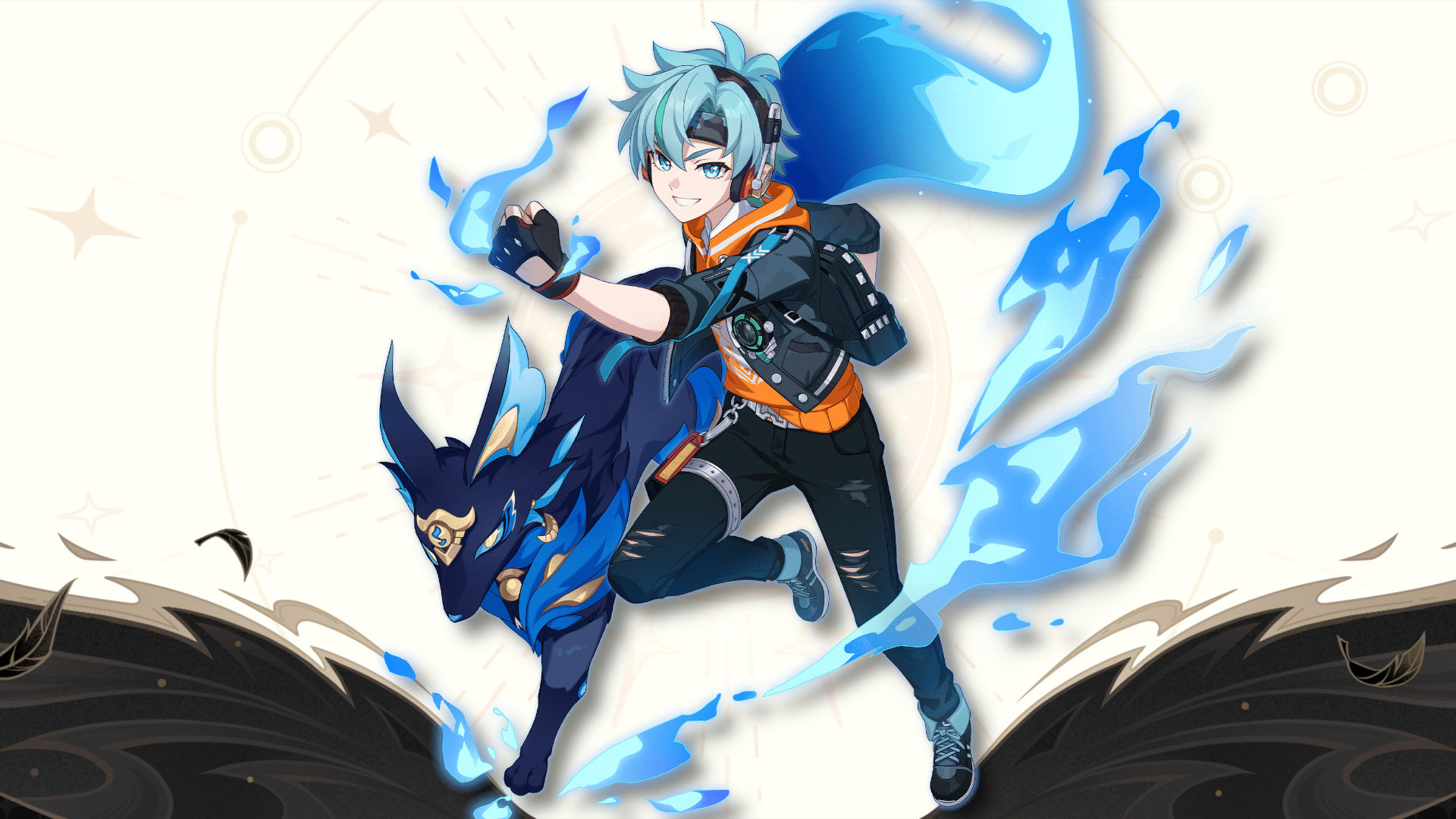 Evolution is earned through the bond you build with an Anima you actually field.
Step 4 is the one new players skip. Because evolving can change an Anima’s combat role, evolution is not purely upside for a fixed lineup. It can move an Anima’s best row or its Aspect fit, which means the formation that got you to the milestone might not be the formation you want afterward.
Sanity-check the result against the formation guide and your team builder draft rather than assuming an evolved unit slots back into the exact same spot it left.
Where Bond Encounters come from
Bond Encounters are the events that raise Bond level, and exploration is where they surface. If your Bonds feel stuck, the fix is usually more time exploring with your core Anima fielded, not more combat grinding. Pair this with the bond guide, which covers the encounter loop in detail.
A worked example: planning one Anima’s evolution
Say you took Bladehound as an early Strength-Aspect Explorer (a common reroll guide pick). Here is how the evolution timeline realistically plays out for a single unit.
| Stage | What you do | What it costs | What you get |
|---|---|---|---|
| Early | Field Bladehound in your main formation | Playtime, not gems | Steady Bond gain per session |
| Mid | Route exploration toward Bond Encounters | Attention, not materials | Bond climbs toward the milestone |
| Milestone | Evolve once eligible | The evolution itself | New form, possibly a new role |
| After | Re-slot in the team builder | A formation rethink | A tuned lineup, not a broken one |
The lesson from the table: the expensive input is your attention, spread over sessions, not a one-time resource dump. That is why picking a core early and sticking with it beats chasing every shiny unit you pull.
It also means a rushed player and a patient player end up in very different places. If you keep swapping your formation to try the newest Anima, you reset the clock on every Bond, and nothing evolves. If you run the same core for a stretch, several of your units approach their milestones at roughly the same time, and your whole formation levels up in personality and kit together. Steady beats scattered here.
Caveat: the number of Bond milestones per Anima, and whether every Anima has an evolved form at all, are unconfirmed. Treat the timeline above as the shape of the system, not a guaranteed schedule.
Does an evolved Anima always keep its Trait row?
Not necessarily, and this is the single most important planning caveat. Trait decides which row an Anima fights in (front, mid, or back), as covered in the aspect synergy guide and the formation guide. Because evolution can change an Anima’s kit, it can in principle change how you want to deploy that unit.
Two practical rules follow from that uncertainty:
- Do not pre-build your endgame formation around an un-evolved unit’s current row. If it might move, leave yourself flexibility.
- Re-open the team builder after every evolution. A thirty-second check saves you from running a broken formation for a week without noticing.
If an evolution does shift a unit off your Aspect’s best row, you have options: keep it for the new role, or rotate in another Anima of the same Aspect to hold the old slot. The Anima dex is where you find same-Aspect replacements by Trait.
What to re-check the moment an evolution lands
The thirty-second check is worth spelling out, because “look at the formation again” is vague enough that people skip it. Work through these four in order:
- The Trait, first. It is the field that decides the row. If it changed, everything below it is in question and you should rebuild the lineup rather than patch it.
- The Aspect count. Aspect effects trigger on how many units of that Aspect you field, so losing or gaining a body in an Aspect can silently switch a bonus off. Count them, do not eyeball it.
- The damage type against your current content. An evolved kit can lean somewhere new, which matters more against a specific boss than in general clearing.
- Who got pushed out. If the evolved unit now wants a different slot, the Anima it displaced needs somewhere to go or it stops earning Bond entirely.
Run this once and it takes under a minute. Skip it and the usual symptom is a formation that quietly stopped triggering an Aspect bonus several fights ago.
Where Chromatic Anima fit
Chromatic Anima are rare colour variants of standard species, and they are a separate system from evolution even though both change how an Anima looks. Evolution is earned through Bond on a unit you own and changes its form and kit. A Chromatic is a rare version you have to encounter, and the game presents it as a switchable appearance rather than a stronger unit.
You can evolve a standard Anima without ever touching a Chromatic, and that is what most players should do first. For the Switch Chroma slot, how many variants a species has, and how sightings are flagged, see the Chromatic Anima guide.
 The Anima you invest in early are the ones with evolved forms ready when the content gets harder.
“Evolution” the mechanic vs. the “Evolution Test” beta
These share a word and nothing else, and the overlap trips up new players constantly:
- Evolution (mechanic): how a single Anima grows into a new form, covered above.
- Evolution Test (beta): the closed beta build of the whole game, running from July 9, 2026, on PC, iOS, and Android. It is a testing phase, not a feature you activate on an Anima.
If you are trying to get into the beta itself, that is a different track: see the Evolution Test sign-up guide for registration and the Evolution Test FAQ for dates, data wipes, and platform questions.
Because the Evolution Test is a closed beta, your progress (including evolved Anima and any Chromatics) may be reset in a data wipe before launch. That is a normal part of testing, not a bug, but it is a reason to treat this phase as learning the systems rather than locking in a permanent account.
How evolution fits your wider early game
Evolution does not exist in isolation. It sits at the intersection of a few systems you are already juggling as a new player:
- Reroll and milestone picks. Your Level 18, 21, and 24 Aspect Gem 5-star picks (see the reroll guide) define your core roster, and your core is what you will bond and evolve first.
- Aspect synergy. Keeping your evolutions inside one Aspect protects your synergy bonus. If an evolution changes a unit’s role, prefer covering the gap with another Anima of the same Aspect (see the aspect synergy guide).
- Beginner progression. For the order to tackle all of this, the beginner progression guide sequences your first hours so you are not bonding units you will drop later.
- Eidos. The Eidos database and the Eidos guide cover the characters you travel with; evolution is an Anima system, but the Eidos you field shapes the run around it.
For the story context behind why Anima change form at all, the lore primer frames evolution as a narrative beat rather than a pure power curve, which is consistent with how the game presents it.
Common evolution mistakes to avoid
A few patterns cost new players time:
- Bonding too many Anima at once. Attention is the limiter. Spreading Bond Encounters across a dozen units means none of them evolves soon. Commit to a core.
- Assuming evolution is a drop-in upgrade. Because the role can change, always re-check the formation guide and team builder afterward.
- Chasing Chromatics before you have a working team. The rare-variant hunt is endgame; a functional Aspect formation comes first.
- Confusing the mechanic with the beta. If a guide or friend says “evolution,” check whether they mean the Anima system or the Evolution Test build.
- Forgetting the wipe risk. In closed beta, treat evolved forms as practice, not permanent progress.
Bottom line
Evolution in Honkai: Nexus Anima rewards the Anima you actually invest in. Bond with a unit, hit its milestone, and it evolves into a stronger form, sometimes with a changed role that you then design around. Prioritize bonding the two or three Anima you field most, keep Chromatic variants as a later collection goal, and do not confuse the mechanic with the Evolution Test beta.
Start with the bond guide for how to raise Bonds fast, route your exploration toward Bond Encounters, and re-plan your lineup in the team builder once your key Anima evolve. If you are still choosing that core, the reroll guide and Anima dex are the place to lock it in.
Frequently asked questions
- How do Anima evolve in Honkai: Nexus Anima?
- Anima evolve by deepening their Bond with you, not just by grinding stats. Evolution is framed as a narrative milestone: as an Anima trusts you more through Bond Encounters and shared story beats, it unlocks a changed form with new abilities. Raising the Bond level is the lever, so evolution and the bond system are two halves of the same loop.
- Is evolution the same thing as the Evolution Test?
- No. The Evolution Test is the name of the closed beta running from July 9, 2026, a testing phase for the whole game. Evolution as a mechanic is how an individual Anima grows into a new form. They share a word but are unrelated: one is a beta build, the other is a gameplay system you use inside it.
- Does evolving an Anima change how it plays?
- Evolution is described as more than a stat bump: an evolved form can shift an Anima's look and kit, so it can affect its combat value. Because the game is in closed beta, treat the exact per-Anima changes as unconfirmed and expect them to be tuned before launch.
- Which Anima should I evolve first?
- Evolve the Anima you actually field, not the highest-rarity unit in storage. Bond only rises on units you spend time with, so your most-played formation members reach their milestones first. Pick two or three core Anima early and concentrate your Bond Encounters on them rather than spreading attention thin across the whole roster.