Honkai: Nexus Anima Exploration Guide: Iia Town & Map
Explore Iia in Honkai: Nexus Anima: the town's key locations, Anima as mounts and traversal companions, the day-night cycle, and the built-in photo mode.
Honkai: Nexus Anima is not only an auto-chess game: it wraps its battles in an explorable open world that starts in the town of Iia, on the continent of Lusciell in the Plane of Reality. Exploring is how you find new Anima, trigger Bond Encounters, and take in the setting, and your Anima double as your mounts and traversal tools. The short version: get comfortable moving through Iia early, because exploration feeds directly into the roster progression that powers your teams. This guide maps the town, explains Anima traversal, walks through the local cast, and covers the day-night cycle and photo mode.
Note: the game is unreleased, and this guide is built from the Evolution Test (July 9 to 27, 2026, on PC, iOS, and Android). There is no release date yet, so locations and features below reflect current reveals and may change. Treat the map details as a snapshot of the beta build, not a final map.
Key takeaways
- Iia is your hub. The starting town clusters the main-story Eidos, the Arena, and key services, so learning its layout first pays off.
- Anima are your movement kit. Some are mounts, some enable jump pads or gliding, so which traversal Anima you own decides how much of the map you can reach.
- The day-night cycle matters. Time of day changes what you encounter, so revisiting an area at a different hour is a real exploration tactic.
- Exploration is progression. Sweeping the map surfaces Anima and Bond Encounters that feed the evolution loop.
- Photo mode is for enjoyment, not power. The built-in photography tool is a creative feature, not a progression system.
Iia: your home base
Iia is the starting town and the hub you return to between adventures. In the Evolution Test build it is noticeably richer than earlier looks suggested: brighter lighting, fuller streets, more detailed buildings, and a softer fantasy atmosphere overall. It reads less like a tutorial box and more like a place people actually live.
Its core landmarks are worth learning first:
- The New Quarter, the developed heart of town and the busiest district.
- The Nexus Hall, a central civic and story location where main-story beats tend to land.
- The True Nexus Building, home base of the True Nexus Syndicate’s local branch, run by Olympia.
Learning Iia’s layout early pays off because this is where the main-story Eidos, services, and the Arena cluster together. You are a plane-hopping traveler who set out from Iia, so treat the town as the anchor you keep coming back to rather than a place you leave behind. Meet the people who run it in the Eidos guide.
Key locations around town
Beyond the core landmarks, several named spots anchor the districts you pass through. Each tends to attach to a character, a service, or a story beat, so it helps to know what you are walking into.
| Location | What it is | Why you go there |
|---|---|---|
| New Quarter | Developed heart of town | Central hub, scenic, busiest streets |
| Nexus Hall | Civic and story location | Main-story beats |
| True Nexus Building | Syndicate local branch | Olympia and Syndicate business |
| Aniwon Plaza | Central gathering space | People, side content, atmosphere |
| Montemar Academy | School with Planar Geography classes | Shilian teaches here; lore and worldbuilding |
| Quick Bites | Local eatery | A stop with character |
| Kampete’s Gallery | Art gallery | Worth a visit (and a photo) |
| The Arena | Competitive venue | Battles, Arena Masters, ranked play |
These are the places story beats and side content tend to cluster, so sweeping them is the reliable way to surface Bond Encounters and new Anima. If you are new to the whole loop, the beginner progression guide sequences what to prioritize in these early hours.
Honkai: Nexus Anima map: every Iia district
The in-game map labels Iia by district, then by named spot inside each one. Iia sits on Lusciell, one of nine continents on the Reality Plane, and the game says it was “once voted the happiest town in Lusciell”. The top-level areas on the map are:
- Lanes, Old Town and the New Quarter, the three town districts
- Hillside (with a Cave, Woodland and Waterfall), Central Park and the Riverbank
- Beach, Crescent Bridge and Aniwon Plaza
- Nexus Hall (three floors and a basement), the Kakatini Grand Hotel and the Competition Arena
- Sewers and a Subterranean Complex underneath the town
- Dawnstar Isle offshore
Lanes
The Lanes hold Montemar Academy and most of the small shops: BerryNox (consumables), Quick Bites (fast food), AmiTea (milk tea), Dustbound Books and the Globe-Trotter Store, which deals in goods from the nine continents. Nanafey’s home is here too, which is why the opening story keeps returning to this district.
The Lanes are also a sighting spot. Taileep hangs around the delivery lockers in the Lanes, and Bobabirb is seen there too.
Old Town
Old Town is the densest district on the map, with fourteen labelled spots. They include the Community Greens, Wholeheart Ramen, Tactile Post (the postal service), Muscimmon Gym, the Sunrise Café, the Echo Pawnshop, Blacktail Sweets, Hair We Are, the Nachtham Marketplace and the Old Town Gourmet Way.
The Old Town Garden is a key night spot. Felinoxie appears there only at night, and Framamba is sighted there during the day.
Hillside, the park and the coast
The hills behind Iia are where most night-only Anima turn up. Chimaura is spotted around the hills, Noctumbra appears there at midnight, and Starspine and Mushgloomini come out after dark. Vixemourne waits near the Hillside cave at night.
Central Park is where Plumelune lives, and the game says it needs high Charisma to Bond. Along the beach you will find Magisdrake, Chocllamour and Bunmareen. Every Anima page in the Anima dex now lists its known sighting spots under “Where to find”.
Romanesque Hall: the Arena
The Arena is Romanesque Hall, a restored Old World palace at the foot of Iia’s northern mountains. In the story, the Championship Qualifiers run on its floors: elimination rounds on the first floor, the second round on the second. Jalily Belau is its Arena Master.
Quick Travel and the Habitat Map
The tutorial is short: “Open the Map and you can Quick Travel to unlocked locations.” The map also has a Habitat view listing the location, level and Anima of each habitat, and unlocked habitats are Quick Travel destinations too. If you get stuck somewhere, the game has a rescue that corrects your position.
Anima as traversal companions
Your collection is also your movement kit. Anima serve as traversal companions, not just battle units, and this is one of the features that separates Nexus Anima from a menu-driven auto-chess game.
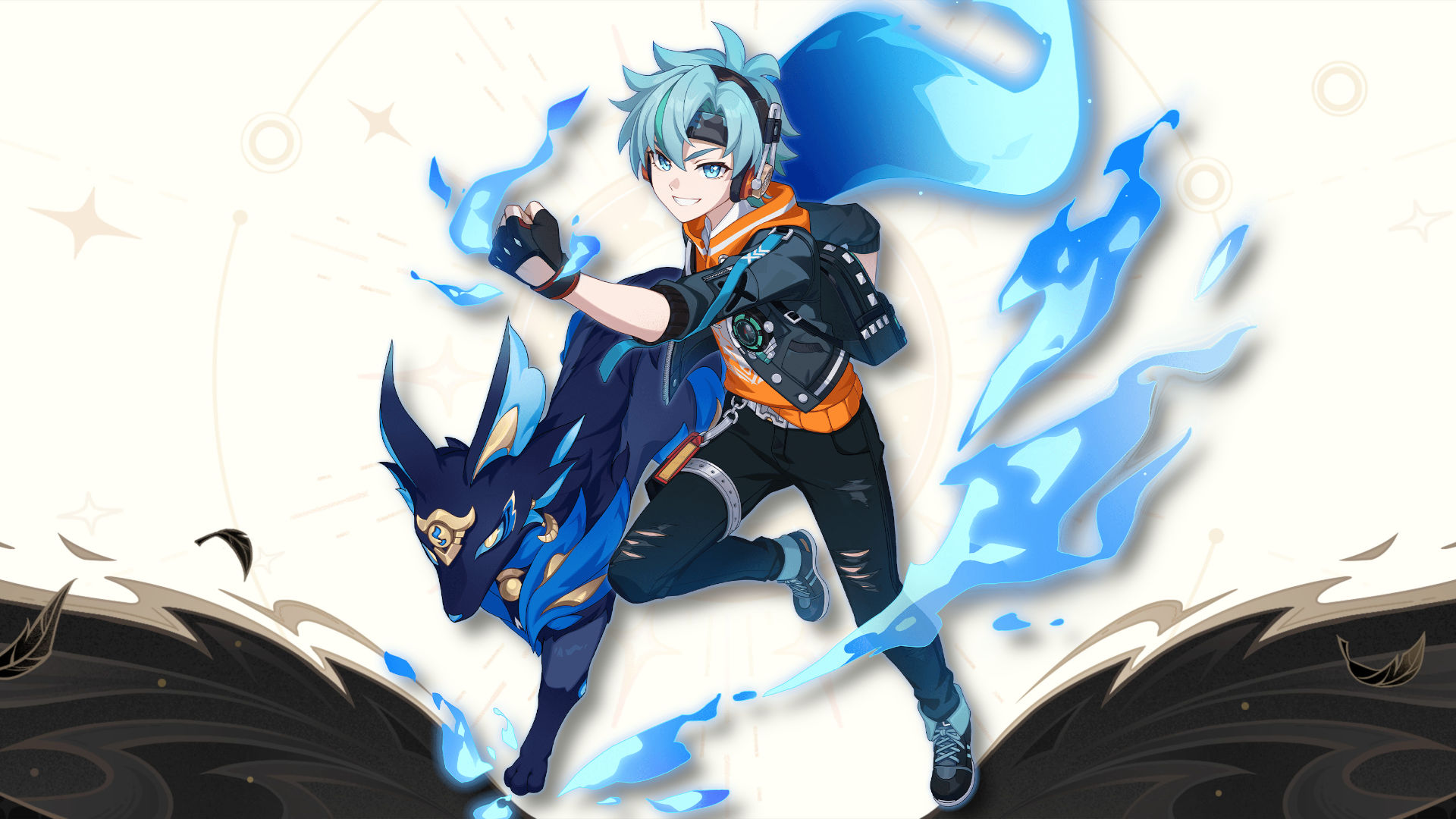 Anima double as mounts and traversal tools, not just battle units.
The traversal roles break down like this, using the game’s own tutorial prompts:
- Puddlipup’s Super Bounce reaches higher places. Hold the ability key to switch to Puddlipup.
- Nomnom breaks through walls.
- Lepinamel’s Glide: press Jump while airborne for a slow descent from a height.
- Vulberry’s Sweet Toss is used in puzzles and quests.
- Mounts: you can ride ground, water and flying Anima, and keep running to vault over obstacles.
- Telepathy lets an Anima read what people truly think, which opens up some conversations.
Nanafey teaches you the first three (Super Bounce, Sweet Toss and Glide) early in the story.
Why traversal Anima are worth catching
The practical upshot is that the Anima you catch have value well beyond your formation. Exploring efficiently is partly a question of which traversal Anima you have unlocked. A mount saves minutes on the ground; a glider or jump-pad Anima can be the only way to reach a ledge, rooftop, or outlying area at all.
That also ties movement back into progression. The more of the map you can reach, the more Anima and Bond Encounters you find, which feeds the bonding and evolution loop. In other words, a traversal Anima is not “wasted” roster space even if it never enters a battle: it is what lets you find the units that do. Browse what is catchable in the Anima dex and note which ones double as movement tools.
Covering more ground is also how you run into rare colour variants. Those are Chromatic Anima, and sightings can be flagged for you to track rather than left purely to luck.
The day-night cycle
Iia and the wider world run on a day-night cycle. Beyond setting the mood, the time of day is worth paying attention to as a mechanic: revisiting an area at a different hour can change what you find there.
The mechanic is concrete: “You can switch between day and night after sitting down on certain benches. Some Anima will only appear at night.” So you do not wait for the clock; you find a bench and flip it.
If a location feels quiet or empty, it may simply be the wrong time of day rather than fully explored. The night list is long: Chimaura, Noctumbra, Starspine and Mushgloomini in the hills, Felinoxie in the Old Town Garden and Catnapir near the Lanes all come out after dark.
Tip: when you clear an area and it feels thin, find the nearest bench and switch to night before writing it off. Check the Anima’s page in the Anima dex for its known sighting spot.
This is a low-effort habit that pays off, because you are already passing through most of Iia repeatedly on your way to the Arena, the Nexus Hall, and the Syndicate branch.
A practical early exploration routine
You do not need a rigid schedule, but a loose routine keeps you from wandering in circles or missing easy Anima. Here is a sensible order for your first hours in Iia:
- Walk the New Quarter first. It is the developed heart of town, so you meet the most people and pick up the most opening story here, including early allies like Nanafey.
- Check in at the True Nexus Building. Olympia and the Syndicate branch are a natural anchor point for main-story direction.
- Unlock a mount as soon as you have one. Ground speed compounds: every trip across town is faster, so an early mount pays back over the whole beta.
- Fan out to the outer spots. Aniwon Plaza, Montemar Academy, Quick Bites, and Kampete’s Gallery each attach to characters or side content worth sweeping.
- Loop back at a different time of day. Anything that felt empty on the first pass is worth a second look after the clock has moved.
The point is not to rush. It is to make sure the ground you cover keeps feeding your roster instead of retreading the same square. Pair this with the beginner progression guide so your exploration and your account level advance together.
Traversal Anima versus battle Anima: an honest caveat
A fair question is whether you should spend roster slots or catching effort on Anima you only use for movement. Battle slots are now clear: the game sets team size at 6, 7 and 8 Anima at player levels 10, 15 and 20. Whether traversal and battle rosters overlap is still unconfirmed. What is safe to say is that reaching more of the map is upstream of everything else, so having at least one reliable mount and, ideally, a glider or jump-pad Anima is worth prioritizing early rather than treating movement as an afterthought.
Beyond the town: the coast and Dawnstar Isle
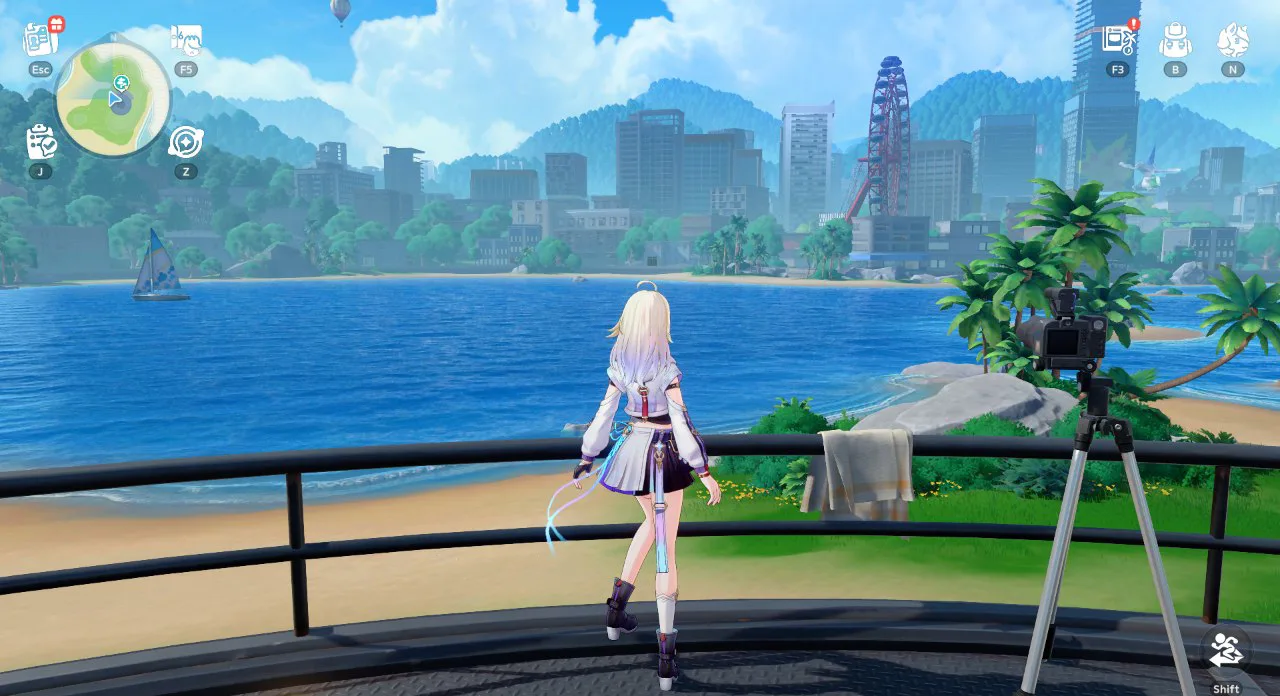
The map now runs well past the New Quarter. Our screenshots show a waterfront district on the edge of Iia: a lighthouse on a sandy point, a harbour railing with a view across the bay to the city’s towers and a Ferris wheel, and a beach lined with umbrellas and sunloungers.
The waterfront outside Iia, looking across the bay to the city skyline.
For what lies beyond Lusciell, the nine continents and the other Planes, see the world guide.
Offshore sits Dawnstar Isle, a small island with its own map. The map marker shows a counter of five paw icons, which tracks the Anima to find there, and a waypoint for Quick Travel.
Ace Challenges
Dawnstar Isle is also where we met our first Ace Challenge. The map panel describes it in one line: “Powerful Anima roam here. Challenge them if you have the strength to face them.” The tutorial text gives the reason to bother: “Defeat opponents in the Ace Challenge to Bond rare Anima and earn Evolith Shards.”
The Dawnstar Isle Ace is Glampa, a Light Anima. The panel listed a recommended team level of 57 and a victory reward row that includes Glampa itself, experience, Aspect Gems and other materials. Evolith Shards matter because the Evolith is what you hold to start an Evolution, which our evolution guide covers.
The Dawnstar Isle map with the Ace Challenge: Glampa panel, showing the Light Aspect, its rewards and a recommended team level of 57.
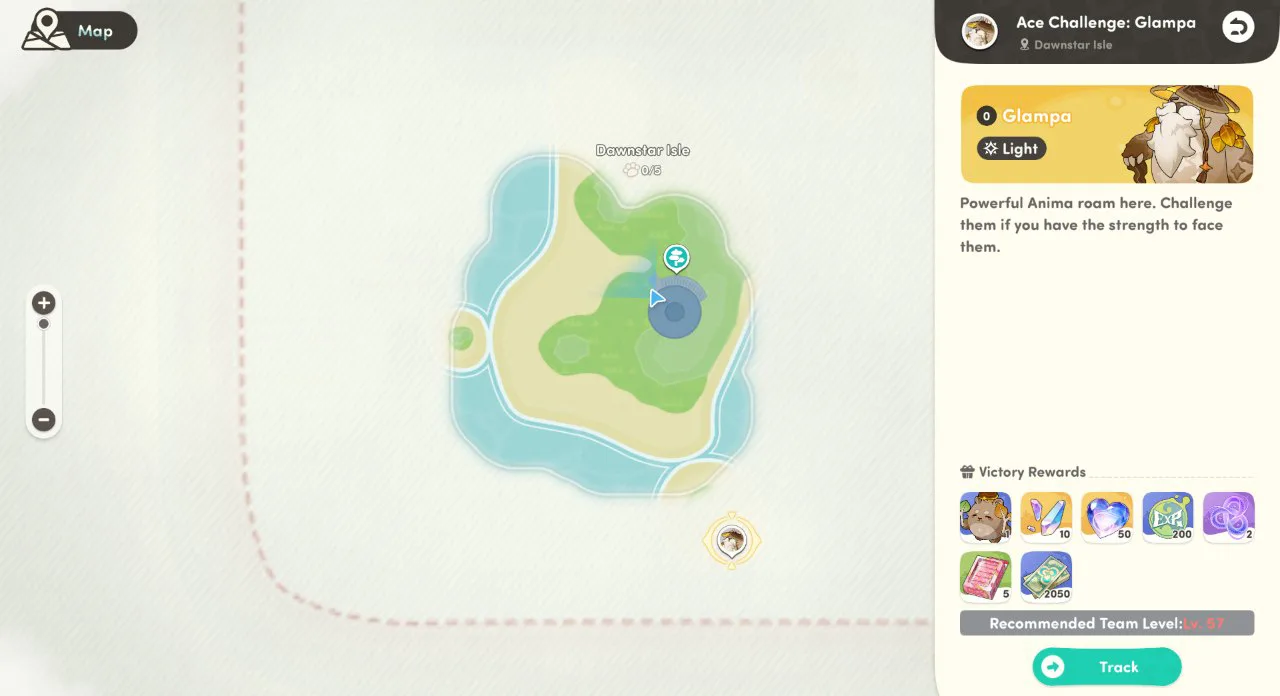
Ace Challenges are a level check, not a puzzle. If the recommended level shows in red, your team is under it, and the beginner progression guide explains how player level and Ascension raise that number.
Habitats: Where Anima Dwell
Habitats arrived with an event called Where Anima Dwell, and the rules say the mode stays after the event ends. The idea is simple: Anima live in specific places, and you can build those places up.
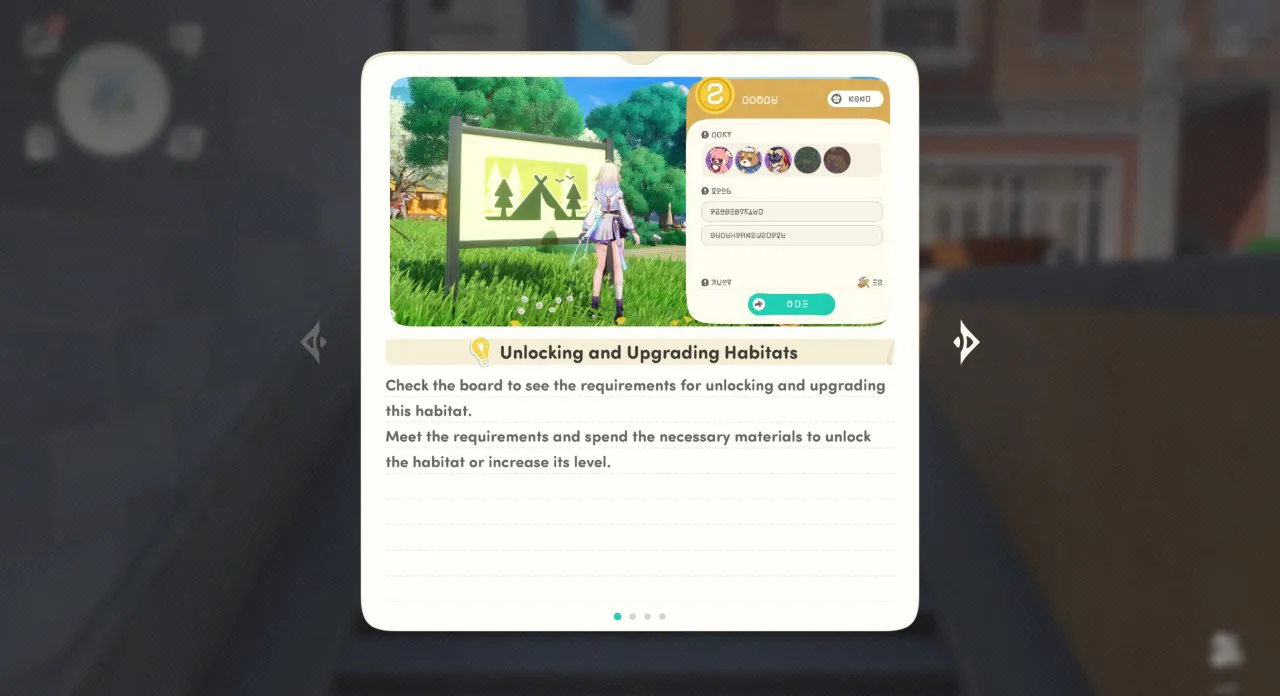
- Unlock and upgrade at the signpost. “Interact with the signpost within a habitat to view the requirements and materials needed to unlock or upgrade it.”
- Some upgrades need furnishings. A level can ask you to place a set number of a given furnishing type.
- Higher levels mean more Anima. Upgrading “unlocks additional furnishing placement slots and allows more Anima to appear there”.
- Some Anima live only here. “Some Anima can only be encountered in habitats.”
- Quick Travel. Once unlocked, a habitat is reachable from the Habitat Map.
The in-game tutorial card for unlocking and upgrading habitats, which points you to the signpost in each habitat.
How many habitats are there?
An NPC line puts it at seven: “there are seven habitats on record with the Nexus Association.” A block of place names in the game lists exactly seven, which we take to be the set: Hillside: Woodland, Hillside: Waterfall, Old Town: Childhood Dreams, Beach: Feast, Lanes: Blue Bricks, Park: Greens and Dawnstar Isle. That match is our reading, not a labelled in-game list.
Furnishings and crafting
Furnishings come in four categories: Leisure, Environment, Facilities and Supplies. They are made in the Crafting menu from materials you pick up while exploring and from treasure chests, and the Furnishing Catalog shows how to get each one. Collection milestones in the catalog pay Aspect Gems, and habitat level rewards stay claimable after the event ends.
This is a strong reason to open every chest you pass. Exploration materials feed habitats, habitats feed new Anima, and new Anima feed your Anidex and Rapport.
Iia’s locals: the people you meet
Exploration is also how you meet Iia’s cast, and the town’s local Eidos anchor the Evolution Test’s opening story. Getting to know them is part of the point, not a detour from it.
 Iia’s local cast, like the student Nanafey, anchors the Evolution Test’s opening.
A few of the faces you will run into early:
- Olympia runs the True Nexus Syndicate’s Iia branch out of the True Nexus Building. Her Anima is Noctumbra.
- Kiana is a Planestrider who deals with Anima corrupted by Aspect contamination, working on behalf of the Committee for a Joyful Iia. If you want the background on Aspects themselves, the Aspect synergy guide covers how they work in combat.
- Nanafey is a student who becomes an early ally, one of the first friendly faces of the Evolution Test.
- Hua is a passionate young Eidos you cross paths with around town.
- Juelle chairs the Committee for a Joyful Iia, which the game describes as the town’s de facto governing body. The Committee, the True Nexus Syndicate and the Nexus Association each hold quotas to recommend players for the Championship Qualifiers.
- Shilian teaches Planar Geography at Montemar Academy, which is where a lot of the setting’s worldbuilding surfaces. For the wider setting, see the lore primer.
The Arena crew
The Arena has its own staff worth knowing:
- Jalily Belau is the Arena Master.
- Cassio Rollex and Maple Manybell are the Deputy Arena Masters.
You can read the full local roster in the Eidos guide and on the Eidos page. If you are wondering how bonds with these characters and your Anima develop, the bond guide covers that side.
The photography tool
The game includes a built-in photography tool for capturing your Anima and the world around them. It is a creative and customization feature rather than a progression system, so it will not level anything up, but it rewards seeking out scenic spots.
Kampete’s Gallery, the New Quarter, and the brighter streets of the Evolution Test build make natural subjects, and the day-night cycle gives you different lighting to shoot the same location. If you enjoy the collection-and-companion side of the game, photo mode is where that shows off. It is a nice pairing with traversal: the places that are hardest to reach are often the ones most worth photographing.
How exploration feeds your roster
It is worth stating the loop plainly, because it is easy to treat the open world as scenery. It is not. Exploring is the front end of your entire progression.
Here is the chain:
- Explore Iia and its districts, ideally on a traversal Anima so you cover more ground.
- Surface new Anima and Bond Encounters as you sweep locations and vary the time of day.
- Grow and bond your roster, then push units through the evolution loop.
- Turn that roster into teams with the formation guide and the team builder, and check where units land on the tier list.
Because the milestone 5-star picks in the reroll guide give you a foundation to build around, exploration is what fleshes out the rest of the roster that supports those anchors. The two work together: pick a direction early, then explore to fill it in.
Bottom line
Exploration in Honkai: Nexus Anima runs on Iia as a hub, Anima as your mounts and traversal tools, and a day-night cycle that rewards coming back to places. Sweep the town’s key locations to surface Anima and Bond Encounters, unlock traversal Anima to reach more of the map, then head out to the coast, Dawnstar Isle’s Ace Challenge and the habitats you can build up. Meet the people of Iia in the Eidos guide, turn your exploration into a stronger roster through the bond guide and evolution guide, and draft the teams it feeds in the team builder. The Evolution Test has ended; the next beta test guide covers what comes next, and the Evolution Test FAQ covers how the last test worked.
Frequently asked questions
- Where does Honkai: Nexus Anima start?
- The Evolution Test opens in Iia, the game's starting town in the Plane of Reality. Its landmarks include the New Quarter, the Nexus Hall, and the True Nexus Building, and its surrounding districts hold the Arena, Montemar Academy, and other spots you visit as the story unfolds.
- Can you ride Anima in Honkai: Nexus Anima?
- Yes. Anima double as traversal companions: some act as mounts, others enable jump pads or gliding, so your collection is also your movement toolkit. Exploring on the right Anima is faster than on foot and reaches places you otherwise could not.
- Does Honkai: Nexus Anima have a day-night cycle?
- Yes. You switch between day and night by sitting down on certain benches, and the game says some Anima only appear at night. Chimaura, Noctumbra, Starspine and Mushgloomini are all sighted in the hills behind Iia after dark.
- What are habitats in Honkai: Nexus Anima?
- Habitats are areas you unlock and upgrade from a signpost by meeting requirements and handing in materials. Each level adds furnishing slots and lets more Anima appear, and some Anima can only be encountered in habitats. The game says seven habitats are on record with the Nexus Association.
- What is an Ace Challenge in Honkai: Nexus Anima?
- A fight against a powerful wild Anima marked on the map. The game says to defeat opponents in the Ace Challenge to Bond rare Anima and earn Evolith Shards. On Dawnstar Isle the Ace Challenge is Glampa, a Light Anima, with a recommended team level of 57.
- Who are the Eidos you meet in Iia?
- Iia's local cast includes Olympia, who runs the True Nexus Syndicate's branch; Kiana, a Planestrider clearing Aspect-corrupted Anima; Nanafey, a student who becomes an early ally; Hua, a passionate young Eidos; and the Arena staff Jalily Belau, Cassio Rollex, and Maple Manybell. Meet them in the Eidos guide.
- How does exploring make my roster stronger?
- Exploration is where you find new Anima and trigger Bond Encounters, which feed the bonding and evolution loop that powers your formations. The more of the map you can reach, the more units and encounters you surface, so movement and roster growth are directly linked.